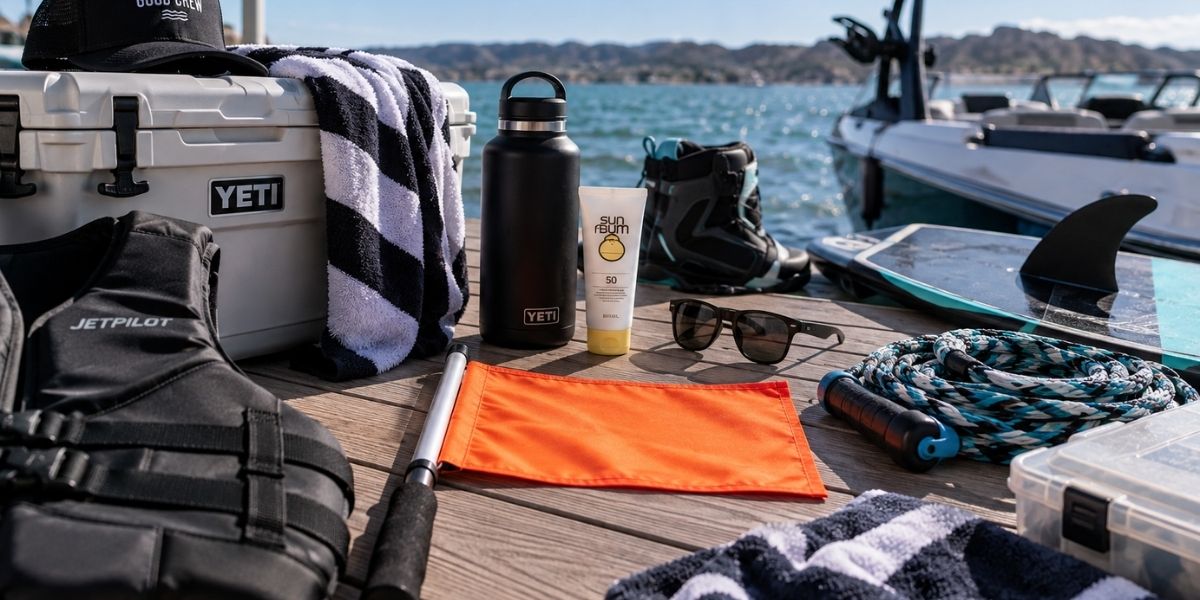
Skier-Down Flags Explained: What Boaters Need to Know
If you spend time wakesurfing, wakeboarding, waterskiing or tubing, you know the flag.
Rider goes down. Orange flag goes up.
But what is actually required? Does it have to be exactly 12 × 12 inches? Does it need a pole? Can the flag be larger? And when exactly are you supposed to display it?
The answer isn't identical everywhere. Skier-down requirements are established by state and, in some cases, by rules applicable to particular waterways. But when you compare those rules, several standards show up again and again.
First: There Isn't One National Skier-Down Flag Rule
Boating laws vary from state to state, and additional rules can apply on particular waterways.
Some states require a skier-down flag. Others don't. Among the states that do, the details can differ—including the required color, dimensions, pole or handle, when the flag must be displayed, and who must act as the observer.
That's why it's important to check the rules that apply wherever you're actually boating.
The Common 12-Inch Standard
One specification appears repeatedly in skier-down flag requirements: at least 12 inches on each side.
Arizona, Washington and California are examples of jurisdictions using a 12-inch minimum. California expressly describes the permitted flag as square or rectangular, while other rules describe a flag measuring at least 12 inches square or at least 12 inches on each side.
The important word is often minimum. A 12-inch requirement doesn't necessarily mean the flag must be exactly 12 × 12.
What About the Pole?
This is another area where requirements differ.
Some jurisdictions simply require the flag to be mounted on a handle. Others are more specific. Washington, for example, requires its skier-down flag to be mounted on a pole that is at least 24 inches long.
Regardless of the exact wording, the purpose is straightforward: the observer needs to be able to display the flag where surrounding boaters can actually see it.
When Does the Flag Go Up?
A skier-down flag isn't generally intended to fly continuously while you're cruising around the lake.
In jurisdictions requiring one, the flag commonly signals that a rider is in the water—such as after a fall or while preparing to be towed.
Some rules extend the signal to other situations involving towing equipment in the water. Again, the exact rule where you're boating controls.
A person sitting low in the water can be much harder to see than the boat beside them. The raised flag gives surrounding boaters another visual signal that someone or something associated with a towing activity is in the water.
Where KRÜGEAR Fits In
When we designed the KRÜGEAR Illuminated Flag for boating, we wanted to build around the skier-down standards boaters already encounter on the water—not reinvent them.
The KRÜGEAR orange safety flag measures 12 × 18 inches, providing the 12-inch minimum dimension found in many skier-down flag requirements while giving the flag a larger rectangular profile.
KRÜGEAR is also available with 38-inch and 48-inch illuminated poles. Both are longer than the 24-inch pole minimum found in jurisdictions such as Washington.
And when you're using the orange safety flag, the illuminated pole can also be set to orange—adding another highly visible element alongside the physical flag.
A Flag Doesn't Replace the Rest of Your Safety Gear
The skier-down flag is only one part of towing safety.
Depending on where you boat, laws may also address observers, mirrors, personal flotation devices, towing hours, distance from other vessels or structures, and other equipment or operating requirements.
Before getting on the water, check the current boating rules for your state and the specific waterway you'll be using.
Built for visibility on the water. Designed to go wherever your KRÜ goes next.
This article provides general boating information and is not legal advice. Boating and towing requirements vary by jurisdiction and waterway and may change. Always check current requirements issued by the state, federal, or local authority governing the water where you boat. KRÜGEAR illumination is an additional visibility feature and is not a substitute for any flag, lighting, safety equipment, or other equipment required by law.